When Is It Necessary to See an Orthopedic Surgeon for Knee Problems in Chandigarh?
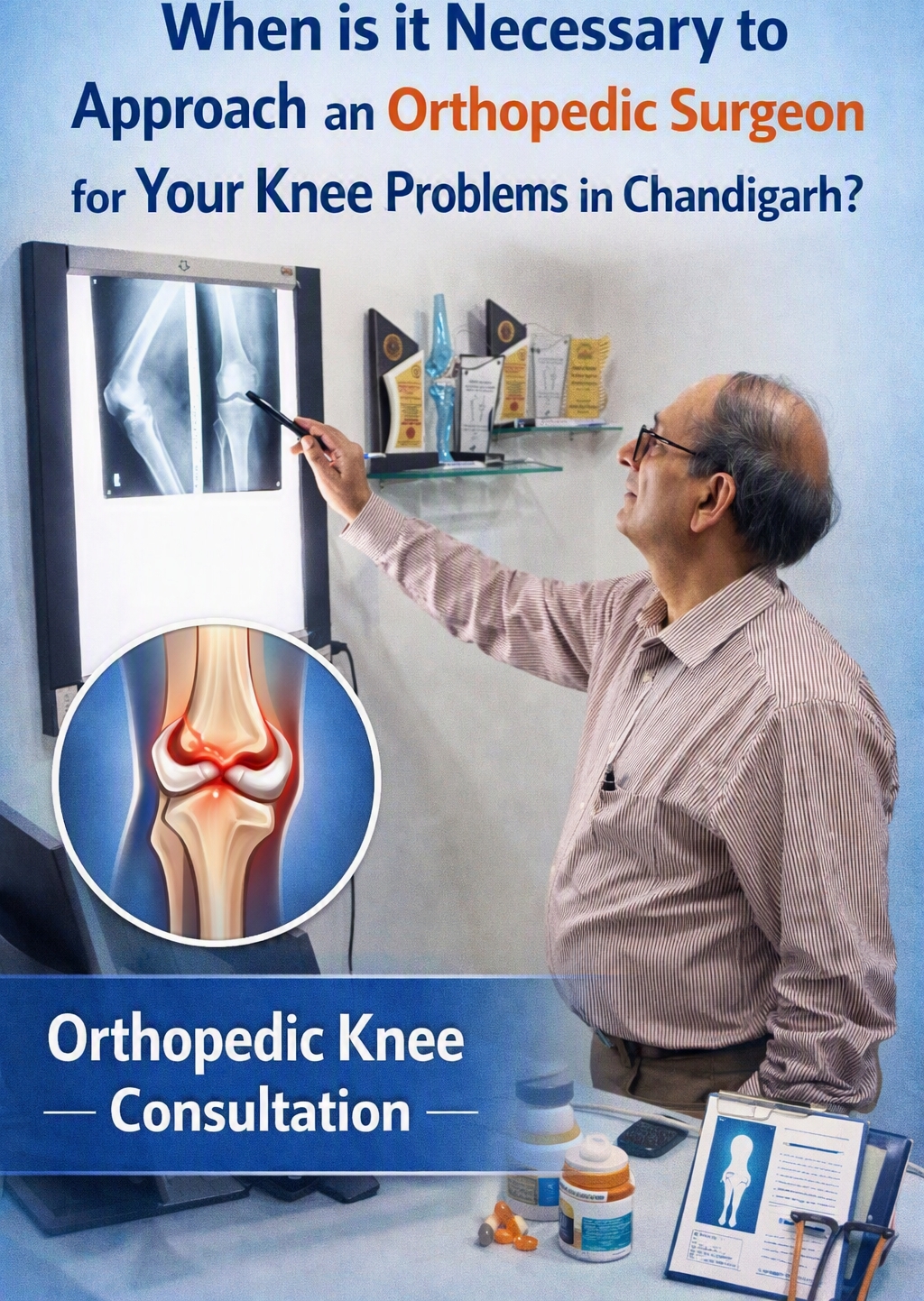
Pain in the knee is a condition which can happen to people of all ages. It can happen because of an injury, overuse, arthritis, lack of cartilage in the knee, or other conditions. Usually, pain in the knee can be treated by rest, and other minor methods. But if the pain doesn’t go away, and it starts affecting your work, then you should see an orthopedic surgeon.
Recognizing the conditions and when to see a doctor will help you in identifying the problem and choosing the best available option for it. Finding the best orthopedic surgeon for knee in Chandigarh can be difficult. However, by identifying the conditions and available options for it, you can take the best steps for it.
When to see an Orthopedic Surgeon?
Only not seeing a specialist for knee problems is not the best option. You should see an orthopedic surgeon if the conditions get worse. Some conditions which force you to see an orthopedic surgeon are mentioned below.
1. Persistent Knee Pain
If you are not able to get relieved from pain by just rest for a long time.
If you are not able to do normal activities like walking or climbing stairs.
2. Difficulty Walking or Climbing Stairs
Risk factors for reduced mobility include osteoarthritis, ligament and cartilage injuries and other conditions affecting the joints.
3. Swelling and Stiffness
Repeated knee swelling or stiffness can indicate an injury or condition such as arthritis.
If swelling or stiffness does not resolve and causes an inability to fully straighten the leg, a medical professional should be seen to evaluate the cause.
4. Knee Instability
Knee instability or “giving way” is abnormal and may indicate an injury.
Stress on an unstable knee may cause the ligaments to completely give way, resulting in a fall. Injuries may also be structural. An orthopedic surgeon can diagnose the injury and determine the next course of treatment which may include physical therapy, or surgery.
5. Pain
If pain is experienced after a knee injury, it is important to have the injury evaluated as there may be damage to the ligaments, tendons and meniscus. An ACL injury should be evaluated as soon as possible.
A thorough examination of the injured knee may allow a medical professional to rule out other, less serious conditions.
Conditions requiring a specialist
A surgery to repair or replace the knee may be performed by an orthopedic surgeon.
Osteoarthritis
Osteoarthritis may be diagnosed and treated by an orthopedic surgeon. The breakdown of cartilage in the joints results in pain and a loss of mobility.
Treatment may include pain management, anti-inflammatory medication and surgical intervention.
Ligament Injuries
Stability of the knee is provided by a number of ligaments. Injury to these ligaments may occur while participating in sports or in other medical/accidental conditions.
Treatment of such injuries is individualized, taking into account the severity of the injury, the person’s age, level of physical activity and other factors.
Meniscus Injuries
The meniscus is a cartilage which acts as a cushion between the bones of the knee. It can get injured or torn during a sports injury or as a result of wear and tear.
Injuries may also occur focally and in some cases may not require an invasive intervention.
However, if symptoms do not improve, further treatment by surgery may be required.
Knee Deformity
Various conditions may cause the legs to be deformed and the knee to be out of its normal alignment. This may lead to difficulty in walking and may cause undue strain and stress to other parts of the leg and knee.
In such cases, a doctor may advise an evaluation of the knee and leg to see if there is a deformity and to what extent. This may also help to decide the course of treatment.
Advanced Joint Disease
When knee pain becomes disabling and limits normal activities of daily living, it may be an indication for surgical removal of the knee joint (knee replacement).
What to Expect From an Orthopedic Surgeon
When you want to consult the top orthopedic doctor for knee in Chandigarh or any surrounding areas, it is useful to have an idea of what to expect during your first meeting with the surgeon.
The surgeon will talk to you about your symptoms, conditions that affected your past health, surgeries and injuries, your general fitness level, and what kinds of activities you can do and what you enjoy doing.
What are my treatment options?
The conditions that affect the knee can range from minor to major and may require both surgical and non-surgical treatments. Some of the non-surgical treatments may include:
- Physiotherapy
- Use of special aids and braces
- Weight loss if overweight
- Certain medications
- Injections
- Modification of your daily activities
The goal of treatment is to alleviate symptoms and improve movement of the knee. In the case where symptoms do not improve or if the knee condition is serious, then a surgical procedure may be required.
When Is Knee Surgery Considered?
Conditions that may require surgery include:
- Major injuries or fractures affecting the knee
- Degeneration of the knee joint (also called osteoarthritis)
- Dislocation of the knee joint
- Tear of the cartilage or meniscus
Some of the surgical procedures that may be recommended to treat the above conditions include total or partial knee replacement, arthroscopy and ligament reconstructions.
In the case where a total knee replacement is recommended, then the use of advanced surgical technology may be offered.
How to Choose a Knee Specialist in Chandigarh
When choosing a knee specialist in Chandigarh, consider the following:
- Whether the specialist has experience treating your knee condition
- Type of surgical treatment offered
- Availability of diagnostic and imaging services
- Range of treatments offered
- Hospital services
- Care offered before, during and after the surgery
The doctor should be able to address all your concerns and give you treatment options.
In the interim, there are a few things you may do to improve knee health including:
- Loose or non-impact physical activities
- Weight loss
- Knee strengthening exercises
- Modification of your daily activities
Its important that patients injured or operated on a joint follow their physiotherapy and rehabilitation programs to aid their healing. Demanding activities should not be resumed prior to full healing.
Conclusion
Pain in the joints and other symptoms attributed to aging should not be ignored. Persisting symptoms of pain, swelling and stiffness could be indicative of an underlying condition and should be evaluated by a professional.
Any symptom that causes disability or diminishes the overall quality of life merits further evaluation. Joint problems fall into this category. An orthopedic specialist, through his/her training and experience, assesses and diagnoses knee problems and design appropriate management strategies. Patients who desire an honest assessment by the ‘Robotic Knee Replacement Surgeon in Mohali‘ should schedule an appointment. A complete assessment will give patients an insight into the existing condition, and management options which may range from conservative care to surgical interventions including knee joint replacement.
Have Questions About Your Knee?
Send Dr. Aggarwal’s team your X-ray or MRI on WhatsApp and get a straight answer on what it means.