Robotic Hip Replacement Surgery Near Me: Understanding Advanced Hip Care
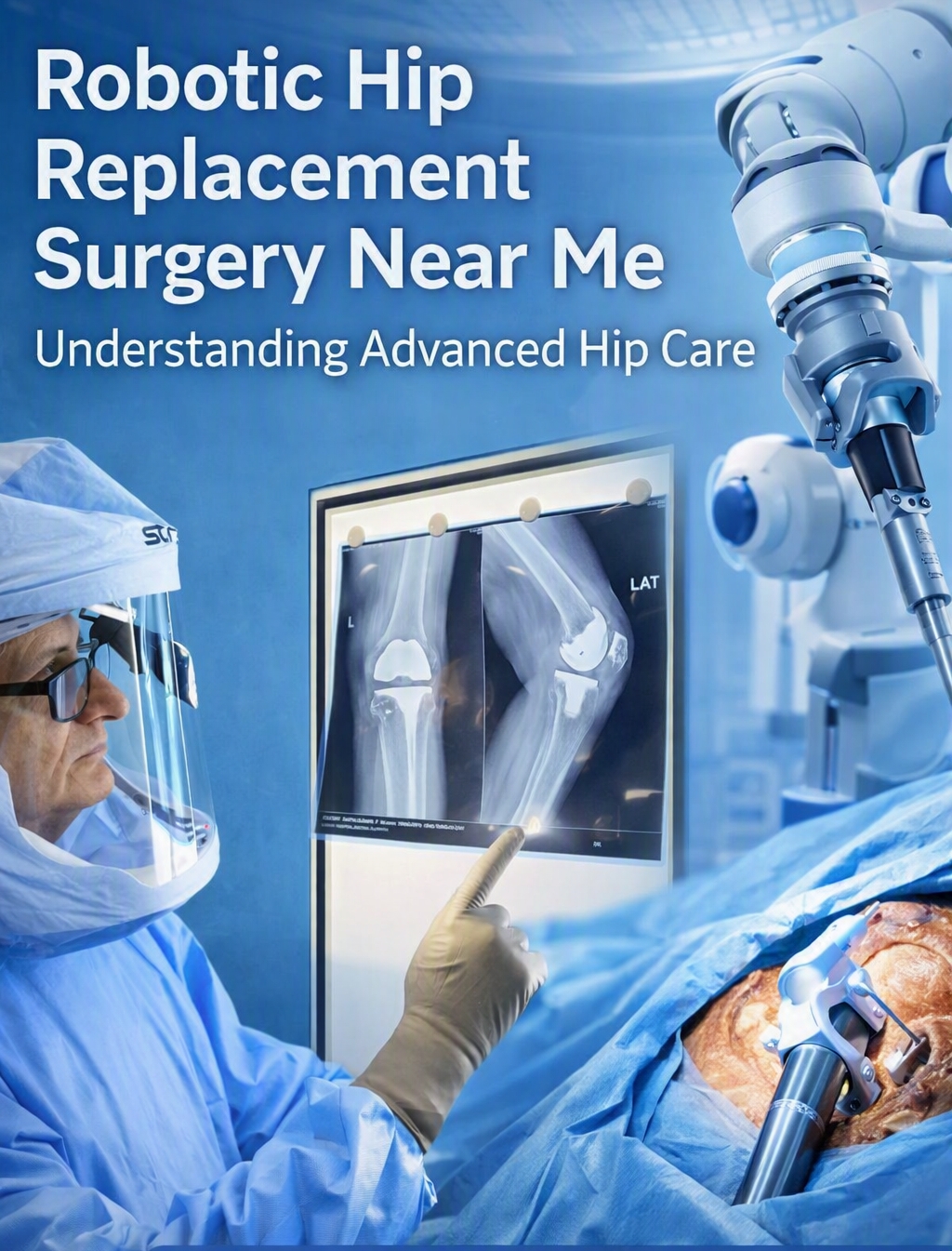
Hip pain can make day to day activities such as walking, or getting in and out of a car, difficult. If injury or disease causes damage to your hip and conservative treatment methods like physical therapy or medication do not provide any relief, hip replacement surgery may be an option. Recently, more advanced techniques in surgery have been developed that may allow for more accurate and optimal placement of the hip replacement components.
Patients searching for Robotic Hip Replacement Surgery Near Me often want to understand how this technology works, who may benefit from it, and what to consider when choosing a hospital and orthopaedic specialist. Understanding the procedure can help patients have a more informed discussion with their healthcare team.
What is Robotic Assisted Hip Replacement?
With this procedure, the surgeon still performs the procedure with the assistance of a computer and robotic arm. The surgeon is always in control of the procedure. The computer and robotic arm provide information and assistance to the surgeon.
Why is Hip Replacement Surgery Done?
Hip replacement surgery is done when the pain and stiffness caused by injury or disease to the hip joint is so severe that everyday activities and functions are restricted and limited.
Hip replacement is considered for:
- Osteoarthritis
- Rheumatoid arthritis
- Avascular necrosis
- Traumatic hip injury
- Significant injury to the articular surface
- Hip dysplasia
- Other conditions that cause damage to the hip joint
Not all patients that have these conditions will need a hip replacement. The decision is based on several factors including your symptoms, physical examination and tests (x-rays).
How does the Robotic System assist the Surgeon?
The primary function of robotic systems for hip replacement is advanced planning. The robotic system is integrated with a computer system to assist the surgeon in analyzing the patient’s anatomy.
Adequate planning can help the surgical team:
- Understand the patient’s pathoanatomy
- Position the hip replacement components
- Assess the leg length inequality and hip rotation
Help the surgeon in making decisions based on the patient’s requirements.
What are the Advantages of Robotic Hip Replacement?
The benefits of using robotics in surgery depends on the patient, type of surgery and the system being used.
Fracture Hip Replacement Surgery
Prior planning can help the surgeon position the hip replacement components in alignment with the patient’s hip and leg anatomy.
Other benefits
Each patient’s hip has a unique anatomy. The surgeon can use the robotic system to assist in planning the surgery based on the patients anatomy.
The system can assist the surgeon in making decisions about positioning and alignment of the hip replacement components.
Surgical guidance
Certain systems allow for real-time data to be integrated to enhance surgical procedures at various stages.
In the context of surgical procedures, the devices serve as an adjunct to the surgeon’s skills and do not substitute for the surgeon. A myriad of factors such as the patient’s health and condition, type of prosthetic implant, and the surgeon’s skill and expertise affect the outcome of the surgery and the patient’s recovery.
Who is a good Candidate for Robotic Hip Replacement?
There are several reasons for a surgeon to determine that robotic assistance is warranted. Those reasons may be dictated by the patient’s anatomy, the surgical requirements and the overall health of the patient.
The decision to proceed with hip replacement is made by the patient and the surgeon, and may not always require the use of advanced surgical technologies.
To learn more about the procedure, contact a board certified orthopedic surgeon in your area to discuss your specific concerns and questions.
Selecting a hospital for robotic hip replacement
Being the nearest hospital is not always the best hospital. Patients should assess the total caregiver team (doctors and nurses), available surgical and diagnostic care, rehabilitation, care and services provided after surgery.
Prior to your decision, ask potential care centers the following questions:
- What kind of robotic technology do you utilize?
- What kind of procedures does your surgical team perform utilizing robotic technology?
- What kind of prosthetic implants do you use?
- What sort of rehabilitative care do you provide?
- What sort of care do you provide after surgery?
What to Expect During Your Stay
We will spend time prior to surgery collecting detailed information about you and your health. This may include reviewing your symptoms, your health history and your physical exam, and/or any imaging studies.
Based on the information available, we may be able to create a digital plan to guide the surgery using robotic technology.
Surgery will involve replacing your hip joint using surgical techniques and technology to assist in measurement and guides.
Following the surgery, there will be members of the health care team available to assist you. You will be in the rehabilitation stage of your surgery to improve your joint function, strength and mobility.
Recovery After Robotic Hip Replacement
Your recovery will be different than the average person’s. This is because each individual has their own unique set of conditions that may improve or slow down the overall recovery process.
You will be moving your hip and/or taking steps to improve your recovery. Improving your recovery may also include improvement of your quality of life and sense of wellness.
Your recovery may be improved or limited by a variety of factors such as your compliance to your surgeon’s instructions.
Recovery and improvement will be measured and assessed during your follow up appointments.
Recovery will also depend on your overall health. Technology can only do so much. There are other factors such as rehabilitation that will determine your recovery.
The Importance of Rehabilitation
Even with advanced surgical technology, rehabilitation remains an important part of recovery.
A physiotherapy programme may include:
- Walking exercises
- Strengthening exercises
- Mobility training
- Balance exercises
- Gradual return to daily activities
Patients should progress according to the recommendations of their healthcare team rather than attempting demanding activities too early.
Questions to Ask Your Orthopaedic Surgeon
- Why do I have hip pain?
- Is surgery to replace my hip the best option?
- Could I be a candidate for robotic-assisted surgery?
- What kinds of robotic and other technology will be used?
- What kind of hip prosthesis is used in this surgery?
- What are the risks?
- How long will my hip recovery be?
- When can I go back to normal activities?
Answers to these questions can help you understand your situation and set appropriate expectations.
Conclusion
Robotic-assisted surgical system is one of many advanced technologies to assist surgeons. It can help in digital and surgical planning and provide intra-operative assistance.
When you have hip pain that limits your daily activities, you should see an best orthopaedic doctor in the Tricity to have your situation assessed. After a thorough evaluation, a surgical plan and appropriate treatment can be developed.

Have Questions About Your Hip?
Send Dr. Aggarwal’s team your X-ray or MRI on WhatsApp and get a straight answer on what it means.