Revision Joint Replacement
When a previous knee or hip implant has worn, loosened or failed, revision surgery is one of the most technically demanding procedures in orthopaedics — Dr. Aggarwal has built a dedicated practice around it.
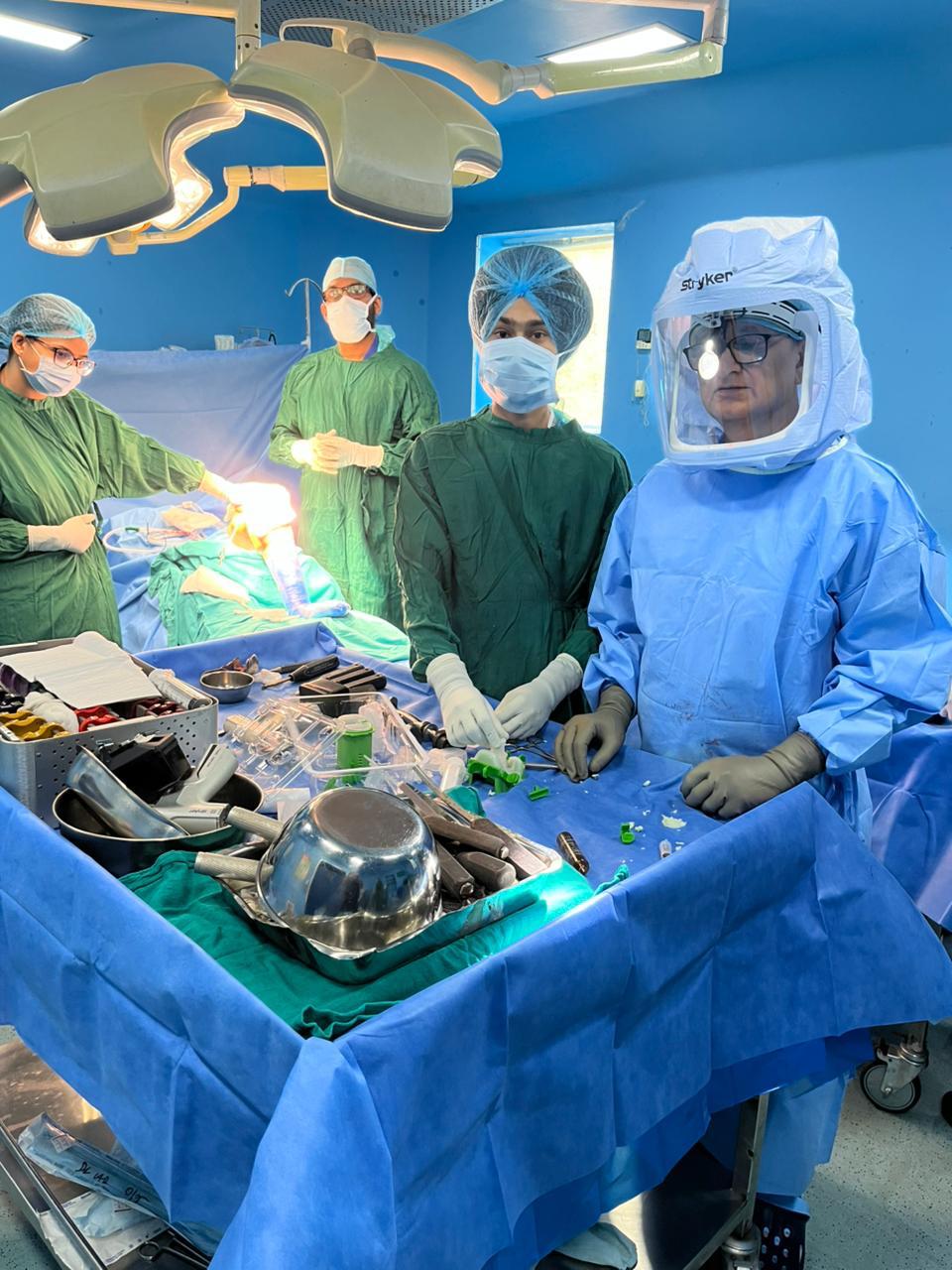
More Complex Than a First Replacement
A first joint replacement is performed on largely undisturbed bone and soft tissue. A revision is not — it involves removing an existing, often well-fixed implant, addressing whatever bone loss or soft-tissue damage caused the failure, and reconstructing the joint in a way that will hold for years to come. Every revision case is different, which is why experience across a high volume of cases matters as much here as anywhere in orthopaedic surgery.
Reconstruction Planned for the Long Term
Revision surgery starts with establishing exactly why the original implant failed — wear, loosening, instability, infection, or a fracture — because the answer changes the surgical plan entirely. Dr. Aggarwal’s academic background, including years spent training other surgeons on complex knee and hip cases at PGIMER Chandigarh and through more than 100 hands-on workshops, underpins how he approaches reconstruction: matching the fix to the specific failure, using specialised implants and bone-grafting techniques where bone loss is significant, and setting a realistic recovery plan for what is, by nature, a longer and more involved surgery than a first replacement.
Concerned About a Previous Implant?
Bring your imaging and history to a consultation — revision cases need a specific, individual plan.